From Japan to Brazil: The Evolution of Jiu-Jitsu Through Time and Culture

From Japan to Brazil: The Evolution of Jiu-Jitsu Through Time and Culture
Today, jiu-jitsu is recognized around the world as both a martial art and a way of life. From self-defense classes in community gyms to high-level competitions streamed online, its influence is undeniable. Yet behind the modern mats and global tournaments lies a story that spans centuries and continents—a story of adaptation, philosophy, and cultural exchange. From the battlefields of feudal Japan to the beaches of Rio de Janeiro, jiu-jitsu has evolved in ways that reflect the societies that embraced it.
Roots in Feudal Japan
The origins of jiu-jitsu trace back to Japan’s feudal era, when samurai warriors dominated the battlefield. When disarmed or forced into close combat, they needed a method of defense that relied on leverage, balance, and technique rather than brute strength. Out of this need grew a collection of grappling and joint-locking techniques designed to subdue an opponent without weapons.
The term jiu-jitsu translates roughly to “the gentle art,” referring to the principle of yielding to an opponent’s force rather than opposing it directly. This philosophy became central to many Japanese martial arts and laid the foundation for later systems such as judo and aikido.
From Tradition to Modernization
By the late 19th century, Japan was undergoing rapid modernization, and many traditional martial arts were being formalized. One of the most influential figures of this period was Jigoro Kano, who in 1882 founded judo—a safer, more educational version of jiu-jitsu. Kano sought to preserve the art’s technical and philosophical essence while making it accessible to students of all ages.
Kano’s students carried his teachings abroad, introducing Japanese grappling arts to new audiences. Among them was Mitsuyo Maeda, a man whose travels would forever change the course of jiu-jitsu’s history.
Maeda and the Brazilian Connection
Mitsuyo Maeda, also known as “Count Koma,” was a skilled judoka and jiu-jitsu practitioner who traveled the world in the early 1900s, demonstrating his art through exhibitions and challenge matches. His journey eventually brought him to Brazil, where he met Gastão Gracie, a businessman whose son Carlos became one of Maeda’s students.
Carlos Gracie absorbed Maeda’s teachings and passed them on to his brothers—most notably Hélio Gracie, who, due to his smaller frame, adapted the techniques to rely more on timing, leverage, and efficiency rather than strength. These adaptations gave birth to what we now know as Brazilian Jiu-Jitsu (BJJ).
The Brazilian Revolution
The Gracie family turned jiu-jitsu into both a lifestyle and a national passion. They issued open challenges to practitioners of other martial arts in vale tudo (“anything goes”) matches to prove the effectiveness of their system. These contests became the precursors to modern mixed martial arts (MMA).
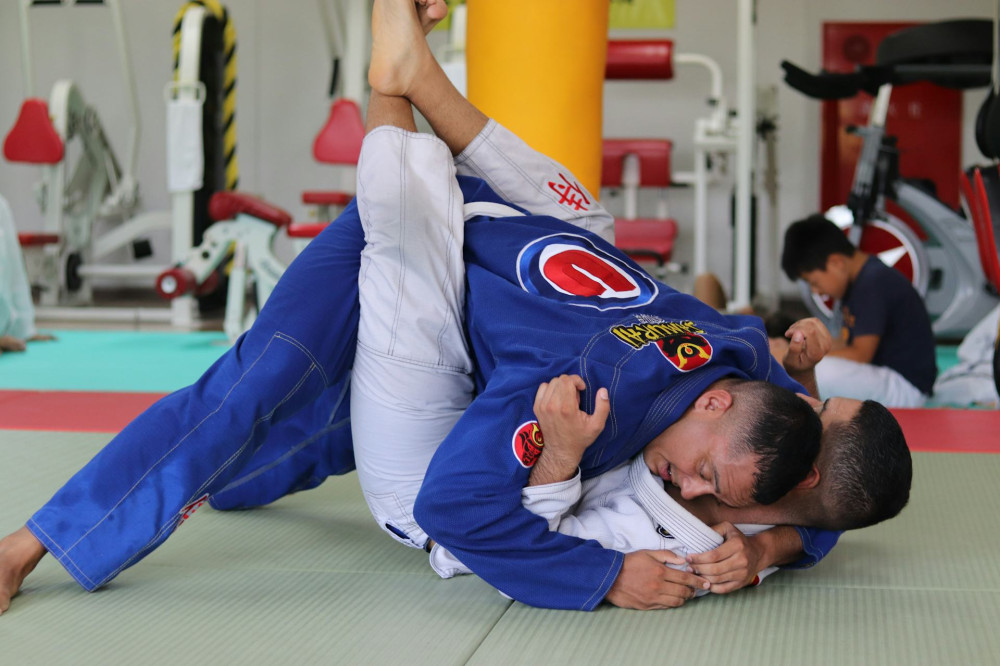
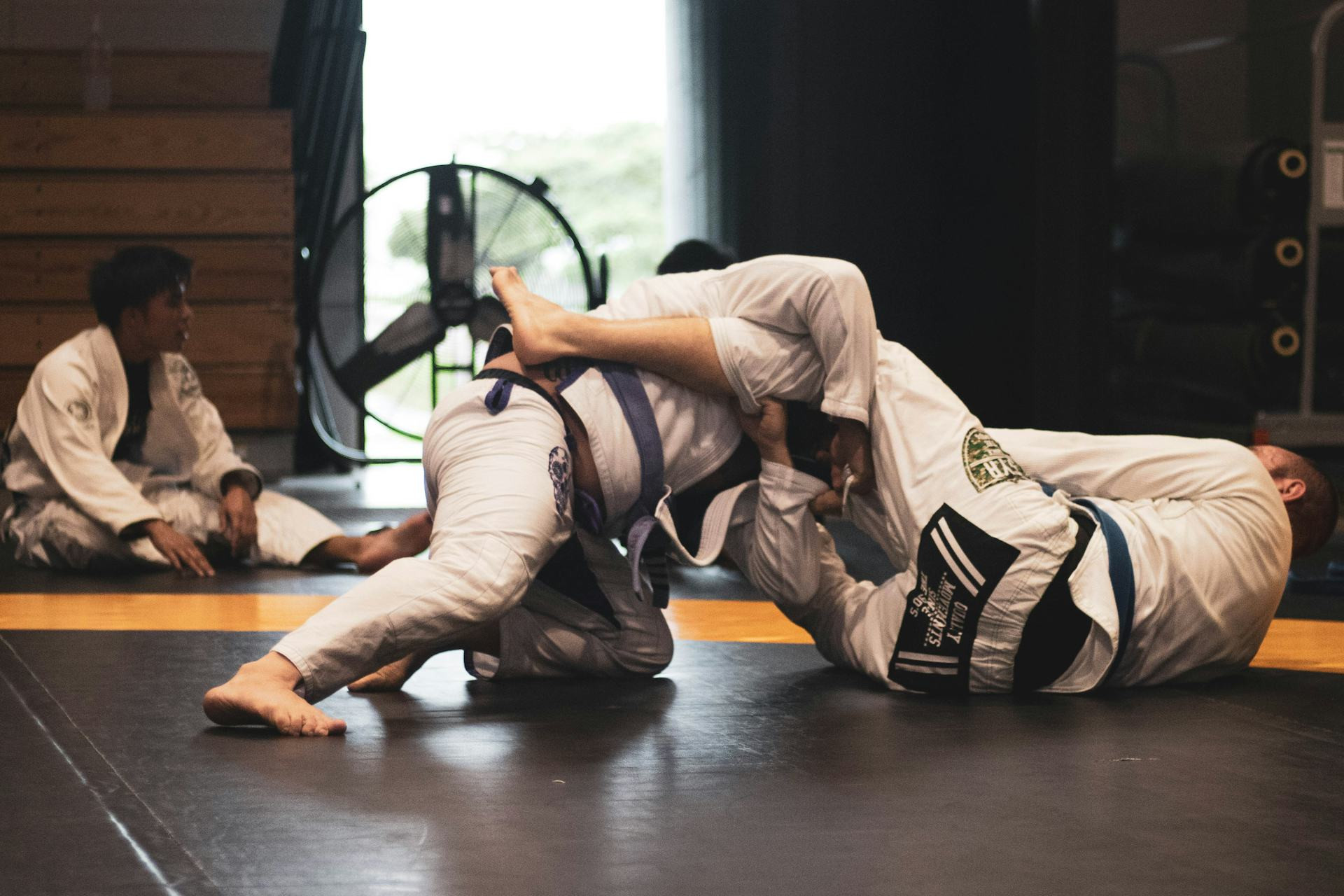
Brazilian Jiu-Jitsu distinguished itself from its Japanese predecessor through its emphasis on ground fighting and submission holds. While traditional jiu-jitsu focused more on throws and standing control, BJJ became an art of fighting from the ground—using positioning, leverage, and technique to force an opponent to submit through chokes and joint locks.
Læs også:


Global Expansion and Modern Influence
In the 1990s, Brazilian Jiu-Jitsu exploded onto the global stage when Royce Gracie won the early Ultimate Fighting Championship (UFC) tournaments in the United States. His victories over larger, stronger opponents demonstrated that skill and strategy could overcome size and power. This sparked a worldwide fascination with BJJ, leading to an explosion of academies across the U.S. and beyond.
Today, BJJ is practiced by people of all ages and backgrounds—from law enforcement officers and MMA fighters to hobbyists seeking fitness and mental discipline. Many practitioners describe it as a form of moving meditation, a way to cultivate patience, humility, and problem-solving under pressure.
A Martial Art in Constant Evolution
Japanese jiu-jitsu, judo, and Brazilian Jiu-Jitsu now coexist, each with its own focus and philosophy. Modern BJJ continues to evolve, influenced by wrestling, MMA, and innovative training methods. At the same time, many practitioners are rediscovering the classical roots of the art to better understand where its techniques and principles originated.
The journey of jiu-jitsu from Japan to Brazil—and from there to the rest of the world—is a testament to the power of cultural exchange and adaptation. It is the story of a tradition that has survived not by resisting change, but by embracing it.
Læs også: