Agility in Combat: Exercises to Improve Kicks, Punches, and Mobility

Agility in Combat: Exercises to Improve Kicks, Punches, and Mobility
Agility is one of the most overlooked qualities in combat sports. Whether you practice karate, taekwondo, kickboxing, or MMA, the ability to move freely and with control is essential for technique, speed, and injury prevention. A mobile body reacts faster, strikes more accurately, and maintains balance under pressure. This guide introduces exercises and training principles that enhance your kicks, punches, and overall mobility—helping you become more effective in combat.
Why Agility Matters
Agility isn’t just about throwing high kicks or moving quickly. It’s about controlling your body through its full range of motion. When your muscles and joints move freely, you can generate more power with less effort. That means smoother transitions, fewer injuries, and better timing.
For fighters, mobility is especially important in the hips, shoulders, and spine—the areas that drive most strikes. Tight hips can limit the height and power of your kicks, while flexible shoulders and a mobile torso allow for stronger, more fluid punches.
Dynamic Warm-Up Before Training
Before working on flexibility and mobility, your body needs to be warm. A dynamic warm-up combines movement and activation, preparing your muscles and joints for more intense work. Try these exercises:
- Leg and hip swings – Stand near a wall and swing one leg forward and backward, then side to side. This loosens the hips and prepares them for kicking.
- Arm circles and shoulder rolls – Perform large, controlled movements to increase blood flow and mobility in the shoulders.
- Torso rotations – With knees slightly bent, rotate your upper body from side to side to activate your core and spine.
- Light shadowboxing – Move freely, throwing relaxed punches and kicks to wake up your muscles and coordination.
The goal isn’t to push your limits but to prepare your body for focused training.
Exercises to Improve Kicks
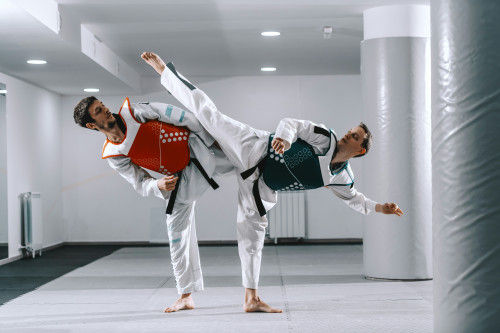
A powerful kick requires both strength and mobility in the hips, hamstrings, and core. Here are three exercises that can help:
- Deep lunge hip openers – Step into a deep lunge and gently press your hips forward while keeping your chest upright. This stretches the hip flexors and improves range of motion.
- Lying leg raises – Lie on your back and lift one leg at a time as high as possible without bending the knee. This strengthens the hip flexors and enhances control.
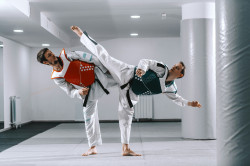
- Controlled high kicks – From a fighting stance, slowly lift your leg into a kicking position, hold briefly, and lower it with control. Repeat on both sides to train balance and movement strength.
These can be done as part of your warm-up or as a separate mobility session a few times a week.
Exercises to Improve Punches
A strong punch starts from the ground up. Power comes from the legs and hips, transferring through a stable core to the shoulders and arms. To maximize this chain of movement, you need both mobility and strength.
- Resistance band torso twists – Anchor a resistance band at chest height and rotate your torso away from the anchor point. This mimics the punching motion and strengthens rotational power.
- Shoulder mobility with a dowel – Hold a dowel or broomstick with a wide grip and slowly move it over your head and behind your back. This increases shoulder flexibility and stability.
- Plank with rotation – From a plank position, lift one arm and rotate your body until you’re facing sideways, reaching toward the ceiling. This builds core strength and improves rotational control.
When combined with technical drills, these exercises help your punches become faster, stronger, and more precise.
Agility and Balance: Two Sides of the Same Coin
Agility without balance is like strength without control. To use your mobility effectively in combat, you must be able to stabilize your body in extended positions. Exercises such as single-leg balance with kicks, yoga warrior poses, and tai chi-inspired movements help connect flexibility with stability.
Try standing on one leg, lifting the other into a kicking position, and holding for 10 seconds. This challenges your balance and muscle control—exactly what you need in a fight.
Læs også:


Stretching After Training
After training, it’s time to focus on static stretching. Hold each stretch for 20–30 seconds while breathing deeply. Good options include:
- Butterfly stretch – Sit with the soles of your feet together and gently press your knees toward the floor.
- Forward fold – Stand with your feet together and bend forward, feeling the stretch in your hamstrings.
- Shoulder stretch against a wall – Place one hand on a wall and turn your body away to open the chest and shoulder.
Regular stretching improves recovery and keeps your body ready for the next session.
Building a Sustainable Routine
Agility training takes patience. It’s better to train a little and often than to overdo it occasionally. Just five to ten minutes a day can make a noticeable difference over time. Combine dynamic mobility work before training with static stretching afterward—and stay consistent.
Agility isn’t just an add-on to combat training; it’s a core component. It makes you faster, more precise, and less prone to injury—and gives you a sense of freedom in movement that you’ll feel both in the gym and in everyday life.
Læs også: